The Top 5 Considerations a Foreigner Should Take Before Buying Property in Saudi Arabia
The real estate market of Saudi Arabia is entering a new age. More opportunities at residential, commercial, and industrial properties within the Kingdom are now available to foreign investors thanks to reforms in Vision 2030. International buyers are getting into the cities of Jeddah, Riyadh, and even parts of Madinah, which are now imposing new regulations for all intents and purposes to attract capital from around the world and hence diversify the economy.
Property acquisition in Saudi Arabia by foreigners is not as simple as just picking up a place and signing papers. The following blog brings the five important considerations that ought to preoccupy every foreign buyer before making a real estate investment in Saudi Arabia.
What You Need to Know Before You Buy Property in Saudi Arabia
Purchasing real estate in another country is always an undertaking requiring much preparation, but this becomes even more prudent in Saudi Arabia, as one must understand the legal, cultural, and financial landscapes before venturing into any deal.
1. Legal Eligibility and Residency Status
Foreigners can buy property in Saudi Arabia, but the type of residency and where the property is located determine eligibility. It does not apply to all foreigners; hence, specific laws under Vision 2030 govern its application and updates.
Property investors usually acquire Premium Residency. This allows non-Saudi nationals to live, work, and invest in the country without requiring a local sponsor. There are two primary types:
- Permanent Residency (SAR 800,000 one-time fee)
- Renewable Residency (SAR 100,000 per year)
Holders of this visa can buy property throughout most parts of the Kingdom, with some exceptions near religious sites.
Other categories include:
- Iqama (residency) holders: May purchase property in many areas but often face more restrictions than Premium Residency holders.
- Business owners or foreign investors: People who have licensed businesses in the Kingdom can buy properties, either commercial or residential, related to their business requirements.
- Foreign companies: They can invest in commercial real estate. Usually, this is done through a joint venture, or one can seek approval from the Ministry of Investment (MISA).
You must note that non-Muslims may not be allowed to own properties near the holy city zones of Makkah and Madinah. This is in addition to the fact that ownership rights vary according to whether the property is for personal use or investment.
Check your residency status and know the property rights it gives you before making any move. This will decide what kind of property you can legally own, where you can buy, and for how long you can hold it.
Not sure which residency type qualifies you to buy property?
Talk to a property advisor to check your eligibility and explore approved investment zones.
2. Location-Specific Restrictions and Zoning Law
Although Saudi Arabia has opened up its real estate market a lot to lure foreign investment, some geographical and regulatory limits are still there, mostly about property ownership in particular places.
Restricted Areas:
- Makkah and Madinah: The two holiest places in Islam, Makkah and Madinah, are off-limits to foreigners as property owners. Nonetheless, foreigners can obtain leases of properties within the cities with the requisite permissions from the relevant authorities.
- Border and Military Zones: Property ownership is restricted within these areas as a measure to ensure national security, where an important investment has been made by the government districts.
Permissible Areas:
Most regions of Saudi Arabia, including big cities and special economic zones, are open to foreign investments. Significant regions are Riyadh, Jeddah, Eastern Province, and Special Economic Zones.
Additionally, in February 2025, Saudi Arabia passed a new Investment Law that aids foreign investors with a simplified process to invest. This law equally protects foreign and local investors from expropriation, while permitting the transfer of profits abroad.
Need help understanding Saudi mortgage options or planning a cash purchase?
Contact Us and let our experts guide you through financing strategies that fit your profile.
3. Financing and Payment Options
People who are not from Saudi Arabia and want to buy property there face different financing problems. While the mortgage market has expanded, with an 18% increase in approvals in 2024, most banks require borrowers to be Saudi nationals. Premium Residency holders may access financing, but many foreign buyers opt for cash purchases. Islamic financing options like Murabaha are prevalent, adhering to Sharia principles.
Investors are required to make a minimum 50% down payment. The remaining can be financed, but with a set time limit of 10 years. Depending on the lender and loan stipulations, interest rates vary between 2% to 6%. You can speak with the financial institutions regarding eligibility and terms and conditions prior to taking the next move.
4. Purpose of Investment
It is highly recommended to set your investment goals first before looking for property to buy in Saudi Arabia. If you decide to use it for your own purposes, then it is advisable to consider its location relative to the workplace, school, and other facilities. In the case that you decide to get rental income from the property, then concentrate on high-profile areas.
5. Legal Processes and Documentation
Foreigners looking to purchase property in Saudi Arabia must understand specific legal procedures. Common steps include:
- Residency Requirement: A legitimate residency permit (Iqama) or Premium Residency (Golden Visa) must be obtained.
- Approval: Get authorization from the Ministry of Investment (MISA) to buy a property.
- Documentation: Prepare necessary documents such as a valid passport, residency permit, financial statements, and a declaration of property use.
- Municipal Approvals: Secure the permits for construction and the necessary approvals from the local authorities.
- Registration: Register the property with the Ministry of Justice to complete the ownership.
It is also a good idea to get in touch with legal experts who are well-versed in Saudi real estate laws so that you can be sure of compliance and a hassle-free transaction.
Conclusion
Saudi Arabia’s real estate market is evolving quickly. With the doors now open to foreign investors, opportunities are expanding across major cities. But buying property here is about understanding legal eligibility, zoning rules, financing limitations, and your long-term goals.
If you have questions about your eligibility or the buying process?
Book a free consultation with our team to explore secure, government-approved opportunities that match your goals.
Related Posts
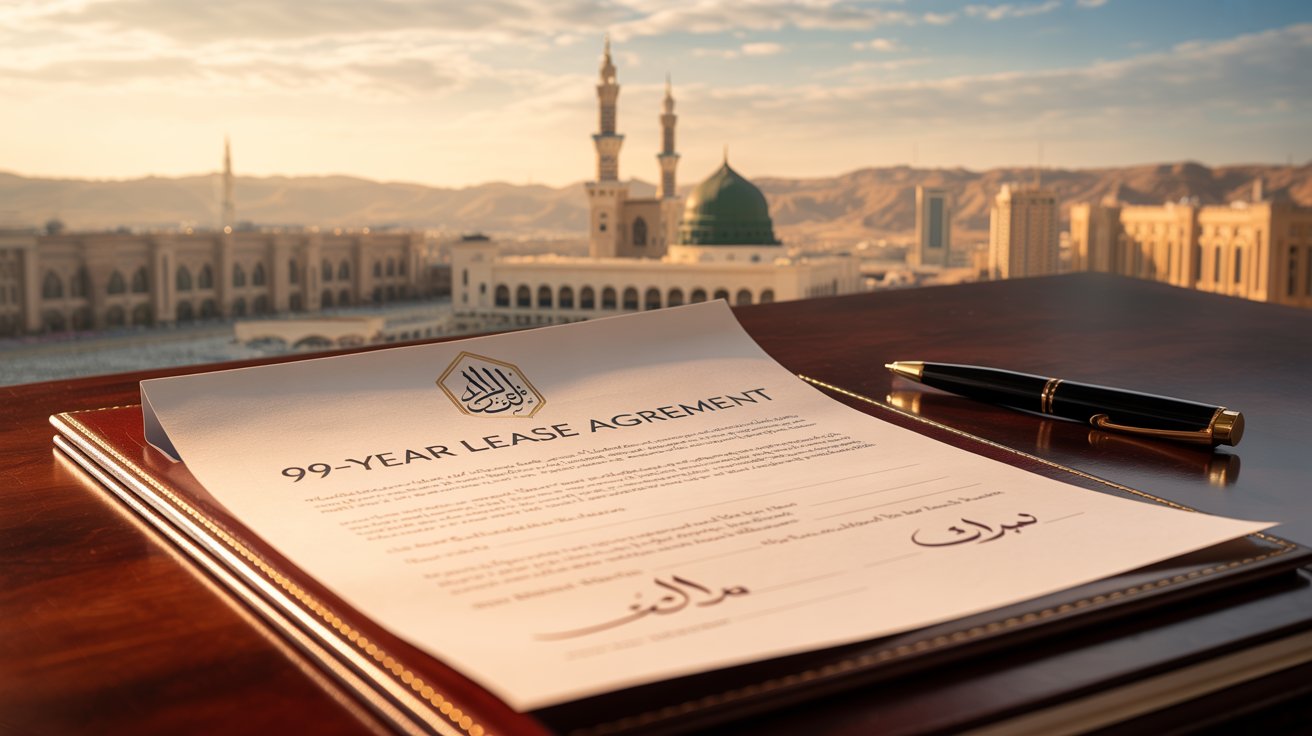
A Guide On the 99-year Leasehold Rule in Madinah
A Guide On the 99-year Leasehold Rule in Madinah The…